
Forum Replies Created
- AuthorPosts
Carl Russell
ModeratorThe items are more adopted than purchased for one. The money is given to a third party, in this case WRP, to dole out as the project is completed. Many items will be set up with a 5-10 year maintenance window. Buy the shade of a large elm on a hedgerow of said farm, then visit to enjoy the shade, and then for a five year period, every successive year that the owner protects that shade (hedgerow-WL habitat), the NPO doles out a portion of that value. Sitting in the shade of the tree is a tangible value for the “purchaser”, but it really represents the intangibles that the owner protects and cultivates, but which traditionally do not contribute to the farm’s economic bottom line.
The folks from Triple-E say they can sell anything. Need a water pumping system to facilitate intensive rotational grazing? This will keep livestock out of waterways, protect water quality, and reduce erosion. Auction off the package of an intesive grazing system as environmental protection, and use the money to buy/build and water system.
I see this as bringing another layer to the buy local initiative. People love to buy produce from their community members, but the market for food restricts the ability to truly recapture the cost of environmental services. This way rural communities can tap into private wealth, and straight out describe the benefits we provide, and find people to step up and fund them. Oh yeah, the “purchases” are tax deductable….
Carl
Moderator
This is a Metavic log trailer that uses either 5.5 hp or 9 hp motors to run hydraulics. This unit probably costs in the neighborhood of $20,000, but it illustrates one answer to the question. They do make a clam bucket for moving soil and compost.They also make a post hole digger, and other attachments.

This unit is a
NorthStar Trencherman Backhoe — 270ccFrom Northern Tool and Equipment and runs about $5500. It is made to be moved with a trailer hitch. Could be moved easily with horses.
If these two systems could be integrated so that you had a log loader set up like the backhoe, without the trailer, but rugged enough to lift some weight, then got the clam bucket then a horse/donk farmer would have a very good tool for moving, stacking, or loading logs, soil, round bales, etc.
Carl
ModeratorThanks John, I was making this point earlier. The effect of the buffer is distinct, and theoretically it can have some beneficial effect of the spikes of draft that the animals have to respond to. However, in my mind training and conditioning a horse to use its weight and power effectively against a load is part of the package that is the working animal.
So to try to completely replace that with a buffer probably doesn’t make sense, but certainly figuring out how to use the concept to give advantage where it is practical and important seems to make a lot of sense to me.
Carl
ModeratorCountymouse;17660 wrote:….. it seems unlikely that raising and lowering the head slightly would fully recover the energy.Yes, but it is representative of the lifting motion that the horse is using to get “under” the load, even if it is not entirely “lifting” the body off of the ground.
Carl
ModeratorJust to clarify, tendons attach muscle to bone, and therefore facilitate movement. They are inelastic, but flexible. Ligaments attach bone to bone, or cartilage, holding joints together.
Tendons are cords of connective tissue attaching muscle to bone, cartilage or other tendons. They are a major contributor to shock absorption, are necessary for support of the horse’s body, and translate the force generated by muscles into movement. Tendons are classified as flexors (flex a joint) or extensors (extend a joint). However, some tendons will flex multiple joints while extending another (the flexor tendons of the hind limb, for example, will flex the fetlock, pastern, and coffin joint, but extend the hock joint). In this case, the tendons (and associated muscles) are named for their most distal action (digital flexion).
Ligaments attach bone to bone or bone to tendon, and are vital in stabilizing joints as well as supporting structures. They are made up of fibrous material that is generally quite strong. Due to their relatively poor blood supply, ligament injuries generally take a long time to heal.
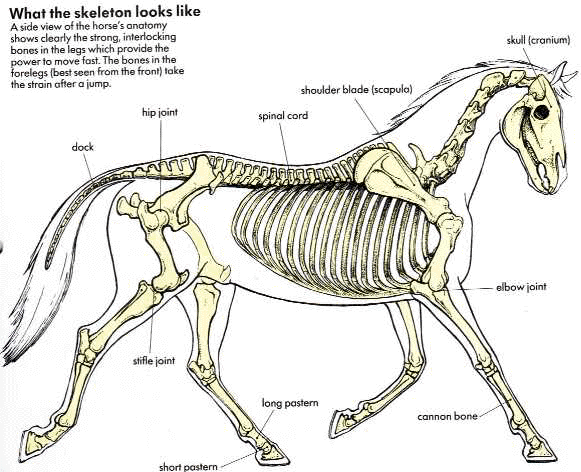
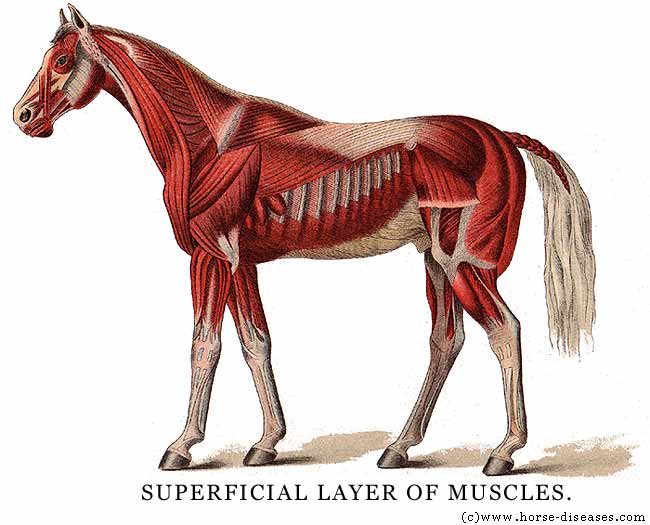
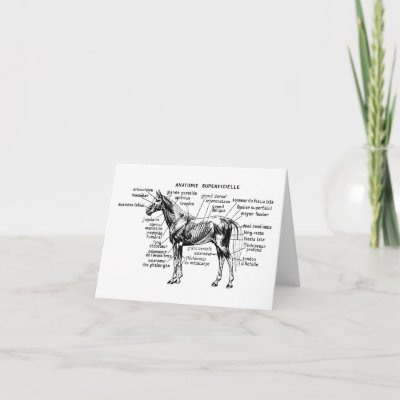
Just thought I’d post a few images. I couldn’t find one yet that shows the anatomy of where the muscles attach to tendons etc.
Carl
ModeratorHow would you guys feel about me approaching RH or SFJ about publishing this thread?
Carl
Moderator
Tim asked me to post this photo, that Jason posted, in this thread to show change in hitch angle. As you can see the line of draft is so high that the horses can’t get much lift, but the log arch is not only lifting the log, but there is probably some buffering going there also to assist the horses.

I thought I would also post this one as well. In this picture you can see with the draft angle almost perfect, that Jason’s horses are basically balancing on their front feet and using the hinds in combination with their body weight to lift this load.Carl
ModeratorJohn, we’re saying the same thing. I was thinking of “ideal” draft angle which is relative to the animal. The hitch point will change with the equipment, and yes then the animal can be compromised.
Carl
ModeratorYes Geoff, I agree with Tim. I appreciate getting challenges to try to clarify myself. I actually did not intend to infer that the tendon was constricting. There is however a tendon, or bundle of tendons that run along the spine, and the muscles attached constrict which allows for the hind end to lift the front end, all the way up to the ears.
I also didn’t not mean to infer that it was the tissue that was providing the “elasticity” that can buffer the load. Rather, it is the infinitely variable nature in which the power can be applied through the tissue that provides the bounce.
I think it is important to point out that the changes in measurable draft, are not just increases in resistance, but a measure of the horse, or ox, applying increased power. Andy pointed that out from his observations. The spring not only compressed due to changes in terrain, but was noticeably compressed by the action of the horse.
If there was a geared machine moving forward at a given speed, then the increased draft would be purely a representation of the change in terrain, but in this case we can see the animal responding to the demand. It is the reserve in the muscles and the ability of the animal to sense that, combined with the act of storing some energy with every step in the elevated from end that gives the animal the elastic ability to overcome the changes in demand.
That is not to say that the spring buffer doesn’t augment that.
If you look at Geoff’s description of how the four-leggeds run, you can see the animal lifting the front end and not only pushing it forward, but positioning the body weight so that is has to fall forward. Truthfully it only needs to lift the front a small amount to be able to lift and reset its front legs without stumbling, but at the same time, if it needs to, it can raise the weight higher to provide more forward-moving ballast.
As far as balance, I agree. We all know that energy can be lost easily trying to keep from falling over. While the body weight is suspended, or in other words abscent of gravity, then it takes less energy to balance. Some times it is harder to walk slowly then to run, because when running our body weight is mostly not touching the ground, and we only need to touch down at intervals to keep the weight moving where we want to go.
Carl
ModeratorThanks Tim, these numbers are great. I will post in the other thread too, but this is the “elasticity” that I was referring to when talking about the inner ability for animals to buffer the draft.
Because they are not geared machines that move at a given speed, or power setting, these animals can apply rapid and escalating, or de-escalating exertion. In this case the draft is in response to overcoming inertia, so there is a measurable point or exertion required to move the load, but the animals start at zero and increase their exertion until they reach that point. The elasticity is not so much in the tissue, but in the way it is applied by the brain.
But if we consider the accuracy of setting the point of draft in giving the animals an effective and consistent angle, so that they can apply not only their rear-end power, but also utilize the ballast from their body weight, then there is also another energy center where the requirements are not directly linear, as in a geared machine.
These numbers also point out how the measured draft increases precisely because the animals are pushing harder. There is a lot of elasticity in that. Animals are clutch, transmission, and throttle all in one, and when they are in good condition they can quickly modify the exertion that is required.
John, the angle of draft, and draft point on the shoulder are consistent from small to big, which is why most of the wagon-hitch horses have been traditionally “leggy”. If you consider some of Tim’s numbers from the other tread relating to wheel size then a tall horse can have reasonably good advantage over the high hitch point on a wagon that will have less draft resistance due to wheel size. This way these delivery wagons could be loaded pretty heavily. Not to mention how the larger wheels would help on the cobble-stone streets.
In terms of 16.2 hh being the best size. It may have more to do with manufacturers picking an average size to aim for, so that farmers could have a known entity.
Carl
ModeratorWay to go. You look good. Both of you!
Carl
ModeratorCountymouse;17574 wrote:Thanks Carl, What I was refering to as “head bobbing” is the normal gentle up and down movement of the horses head at a walk when pulling a heavy load. I’m sure you’ve seen what I’m refering to, I just didn’t know what else to call it. My horse doesn’t do this with light loads and just keeps her head at a moderate height. When the load gets heavy, though, the head goes down a little more and starts to “bob” gently up and down a few inches in rythym with her stride. This is probably the same as the tendon tightening phenomon you are talking about.Yes that is the same thing. My uncertainty was around how it was demonstrated during your experiment. I tried in my own words to describe what I thought you were seeing.
When pulling heavy loads it is important that horses have enough room at the throat of their collar to allow for the bobbing of the head without restricting the wind. Too much room though will make the collar too big and won’t fit the shoulder adequately for appropriate draft. This is true for oxen also, although the bow is tight into the throat, it can’t be too high, nor too low.
The same thing is true for check lines that may also restrict free movement of the head to get that lifting action.
It is somewhat counter intuitive because these animals carry 60% of their weight over the front legs, that there is so little power there. I don’t mean so little, but comparatively little power. The front legs need to stabilize the animal’s weight. There is very little lifting mechanism in those muscles so for the animal to carry its front end forward, the rear end must apply a lifting action so that the front legs can move forward.
Carl
ModeratorI am having a bit of a hard time determining what you are describing as head-bobbing, but the way I read your report is that with the light setting the horse could compress the spring easily which took away the effectiveness of the buffer on the high draft areas. This was also accompanied by head-bobbing.
With the second setting the spring was compressed more commonly around the draft leading up to the highest levels, giving the horse a more elastic buffer at the point where the increase in draft could have more affect on the horse’s movement. This setting had less head bobbing.
The third and tightest setting only compressed the load at the very highest drafts, which was just slightly more elastic that without a buffer, and the head bobbing was back.
Andy you described in action what I tried to offer before as my understanding of how the horse’s bio-mechanics create an elasticity within their own body. If you think of the spine and the hind leg as two sides to a triangle, with the line of draft being the hypotenuse, the tendons and muscles that go up the hind leg and along the spine will lift the front end with every step. The bobbing of the head is the indication that the tendon is compressing all the way up to behind the ears.
With the middle setting the buffer is apparently more effective and as you intuited, I think the horse started to take advantage of the buffer and used the elasticity of the spring to her benefit.
Carl
ModeratorTraveling Woodsman;17567 wrote:I bought a pair of Andrus hames a few summers ago, ….. the top hame strap stays in place and can’t move on you like my steel pulling hames and farm hames do. Jason mentioned something about his being funny up there, I must have a different design.I think that the Andrus design must have improved something, because mine are old WH’s and the square brass ring can slide up or down a notch without removing the strap. It can be a little bothersome, but I have learned to watch out for it when harnessing. In fact it is nice sometimes to be able to adjust that without having to undo the strap.
Carl
ModeratorI’m not sure about your neck of the woods, but Meader Supply in Rochester, NH definitely has them.
I have used hem for years, and find them to be excellent.
[IMG]file:///Users/carlrussell/Library/Caches/TemporaryItems/moz-screenshot.jpg[/IMG]
Carl- AuthorPosts